

Interpretation Field Studies (IFS)
Interpretation Field Studies (IFS) examines how people and systems decide what is happening when direct verification is limited.
These studies focus on applied fields of practice. Here, “field” is used in the applied-research sense: a practical domain (healthcare, incident response, identity, disinformation, escalation) where interpretation is shaped by real constraints and leaves durable traces in artifacts. In such environments, decisions about evidence, credibility, response, and closure cannot be assumed. They must be specified.
IFS treats interpretation as a system behavior that appears across biological, institutional, and technical settings. When verification is constrained, interpretive mechanics become legible: what the system admits as evidence, how credibility is assigned, how authority is routed, how responses are selected, and how closure is produced or refused. When closure fails, the same interpretive event tends to recur across a series, typically with higher cost. The same mechanics determine whether organizational transformation settles into durable decisions and repeatable action, or returns as the same unresolved question in a new form.
IFS applies the General Theory of Interpretation and Meaning System Science. No prior familiarity is required. The studies are descriptive and diagnostic, not prescriptive.
What you’ll find here
A defined domain and participating roles
What the system treats as true and what evidence it requires
A consistent analytical lens using MSS variables (T, P, C, D, A)
Recurring patterns of interpretive success and failure
A repeatable interpretive event defined for each domain
Published studies
IFS-1 · Pain Communication Systems
Interpretation under Asymmetric Access
IFS-2 · Incident Response Systems
Interpretation under Time Pressure
IFS-3 · Digital Identity Systems
Interpretation under Mediated Access
IFS-4 · Disinformation Systems
Interpretation under Adversarial Signal Conditions
IFS-5 · Witness Systems
Interpretation under Isolated Knowing
IFS-6 · Escalation Systems
Interpretation under Authority Loss
A-Series: Foundations
The Charter
Meaning System Science
Scientific Lineage of Meaning
Physics of Becoming
Proportionism
General Theory of Interpretation
B-Series: Transformation Science
Emergence of Transformation Science
Practice of Transformation Science
Restoration of Meaning
C-Series: Governance
AI as a Meaning System
Science as a Meaning System
Pop Culture as Meaning Systems
D-Series: Technical Standards
LDP 1.0
3E Standard™
3E Method™
Institute Resources
About the Institute
Responsible Use of AI
Official Terminology
Research Programs
Interpretation Field Studies
Transformation Management
Essential Reading
Citation Guidelines
Our Thesis
Shared reality is not a default outcome of sincerity, intelligence, or goodwill. When verification is limited, “what is happening” becomes operational only if a system can convert evidence into credibility, credibility into authorized routing, and routing into closure. When that conversion fails, disagreement is often downstream; the primary failure is structural—and it repeats until the closure machinery changes.

Alberto Giacometti, Man Pointing, 1947.
© Artists Rights Society (ARS), New York.
Featured with Pain Communication Systems as asymmetric access: the viewer receives gesture and direction, while the private reference must be inferred from limited cues.
Interpretation Field Studies: IFS-1
Pain Communication Systems
December 2025
This paper explains why pain is often misunderstood even when people try to explain it clearly. It shows how gaps in experience prevent others from interpreting what is being described. Read this if pain is repeatedly minimized, misread, or dismissed despite effort to communicate it.

El Anatsui, Earth’s Skin, 2007.
© El Anatsui / Artists Rights Society (ARS), New York.
Featured with Incident Response Systems as structured assembly: fragments become a usable surface through routing, joining, and shared procedure rather than certainty.
Interpretation Field Studies: IFS-2
Incident Response Systems
December 2025
This paper explains why organizations repeat the same incidents even after corrective action is taken. It shows how interpretation breaks down under time pressure, partial information, and unclear authority. Read this if post-incident reviews feel thorough, but the same failures keep returning.

René Magritte, The Treachery of Images (This Is Not a Pipe), 1929.
© ADAGP / Artists Rights Society (ARS), New York.
Featured with Digital Identity Systems as mediated reference: representation is separated from the object, mirroring identity claims built from symbols rather than direct presence.
Interpretation Field Studies: IFS-3
Digital Identity Systems
December 2025
This paper explains why identity disputes persist even when systems appear secure and compliant. It shows how verification fails when people must rely on credentials, signals, and artifacts instead of direct presence. Read this if identity checks pass technically, but trust still breaks down.
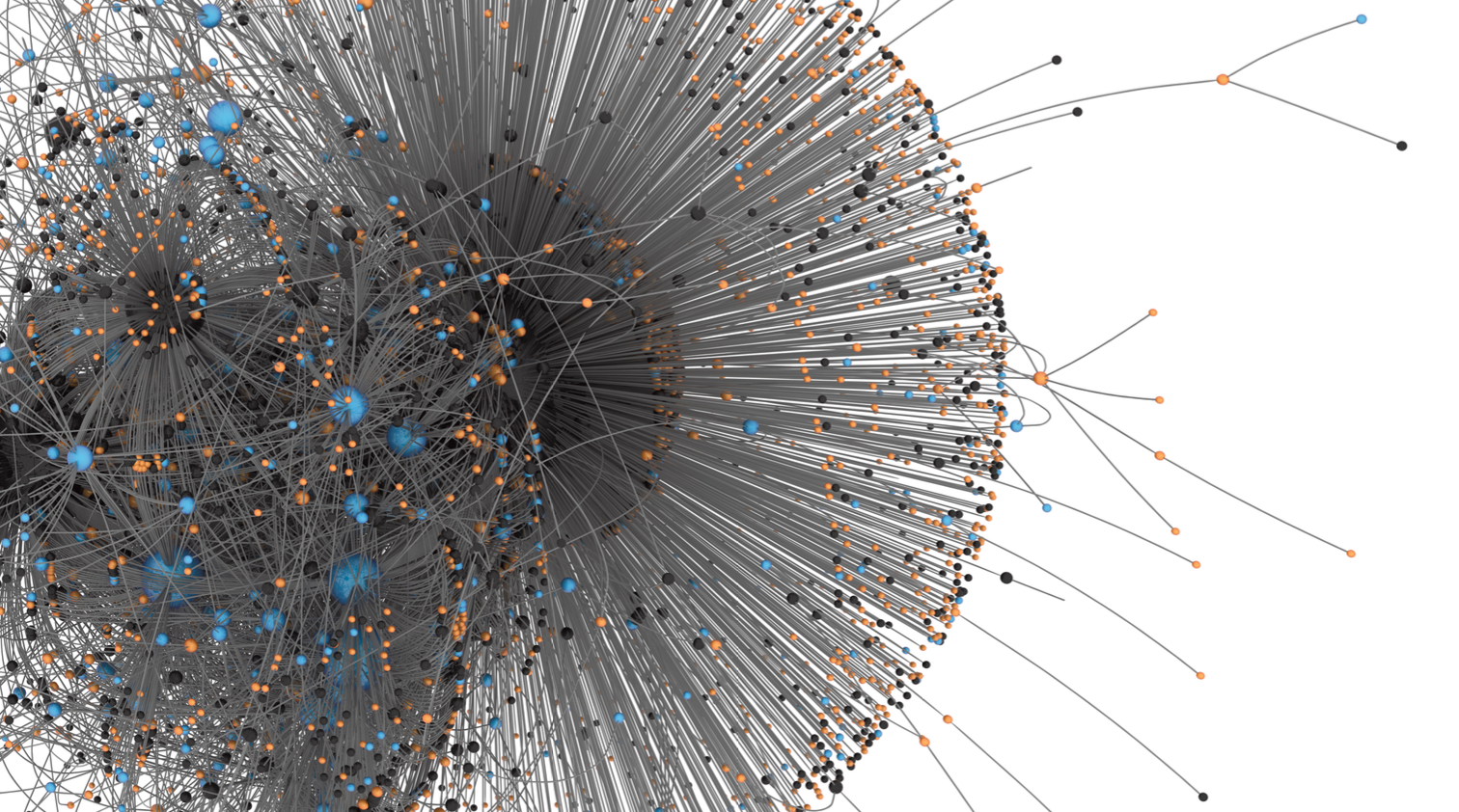
A.-L. Barabási, M. Martino, N. Dehmami, O. Varol, Fake News, 2018.
© A.-L. Barabási, M. Martino, N. Dehmami, O. Varol.
Featured with Disinformation Systems as adversarial signal conditions: propagation structure and relay pathways shape which claims gain credibility, reach, and repetition when the reference condition cannot be directly verified at scale.
Interpretation Field Studies: IFS-4
Disinformation Systems
December 2025
This paper explains why disinformation persists even when accurate information is available. It shows how adversarial signaling succeeds by shaping credibility assignment, evidence thresholds, and closure conditions across platforms and institutions. Read this if false claims spread quickly, corrections arrive, and the system still cannot produce stable resolution.

Edward Hopper, Nighthawks, 1942.
© Artists Rights Society (ARS), New York.
Featured with Witness Systems as isolated knowing: the scene presents proximity without receipt, a shared space without shared account, and the witness remains present while reality stays unshared.
Interpretation Field Studies: IFS-5
Witness Systems
January 2026
This paper explains why systems can keep operating while shared reality diverges. It shows how coherent accounts become isolated in a single witness role when credibility, admissibility, and closure practices prevent reception. Read this if you keep seeing what is happening but cannot get the system to receive it.

Pieter Bruegel the Elder, The Harvesters, 1565.
The Metropolitan Museum of Art, New York. Rogers Fund, 1919. Public Domain (Open Access).
Featured with Escalation Systems as authority loss: the work shows shared labor and visible conditions, but no central decider. Coordination is inferred from outcomes and routines, mirroring how escalated issues can be widely acknowledged while binding decision authority remains absent or non-enforceable.
Interpretation Field Studies: IFS-6
Escalation Systems
January 2026
This paper explains why escalation can increase visibility without producing enforceable closure. It treats escalation as an interpretation system under authority loss, where decision authority is unclear or non-binding across forums. Read this if issues circulate upward and return unchanged.